The War of the Worlds PDF: A Comprehensive Guide
H.G. Wells’ classic science fiction novel, “The War of the Worlds,” is readily available in PDF format online, offering free access to this thrilling tale.
Numerous websites host digital copies, allowing readers to explore the Martian invasion conveniently, and delve into the story’s enduring themes and historical context.
Historical Context of H.G. Wells’ Novel
“The War of the Worlds” emerged from a late 19th-century atmosphere steeped in anxieties about imperial expansion, scientific advancement, and societal change. Published in 1898, the novel reflects Victorian England’s position as a global superpower, ironically mirroring the colonial practices of the British Empire through the Martian invasion. Wells, a keen social commentator, utilized the science fiction genre to critique the arrogance and potential consequences of unchecked power.

The period witnessed rapid technological developments, fueling both optimism and fear. Scientific breakthroughs in areas like bacteriology and astronomy sparked imaginations, but also raised concerns about unforeseen dangers. This backdrop of scientific curiosity and apprehension heavily influenced Wells’ depiction of a technologically superior Martian race. Furthermore, anxieties surrounding potential threats to British dominance, coupled with a growing awareness of social inequalities, contributed to the novel’s exploration of human vulnerability and societal breakdown in the face of overwhelming force. The readily available PDF versions today allow modern readers to connect with these historical undercurrents.
Origins and Publication Details
H.G. Wells initially conceived “The War of the Worlds” as a serial for Pearson’s Magazine in April 1897, captivating readers with its thrilling narrative of a Martian invasion of England. This serialized format allowed Wells to gauge public reaction and refine the story before its publication as a single novel in 1898 by William Heinemann. The novel’s origins lie in Wells’ fascination with scientific speculation and his anxieties about the future of humanity.
The initial publication faced some criticism for its sensationalism, but quickly gained popularity, establishing Wells as a leading figure in science fiction. Today, numerous PDF editions of the original 1898 text, and subsequent reprints, are widely accessible online. These digital versions preserve the novel’s original prose and structure, offering readers a direct connection to Wells’ vision. The ease of accessing the PDF format ensures the story’s continued relevance and enduring appeal to new generations.
The Novel’s Impact on Science Fiction
“The War of the Worlds” profoundly impacted the science fiction genre, establishing many tropes still prevalent today. Its depiction of a technologically superior alien invasion, and the resulting human vulnerability, became a cornerstone of the genre, influencing countless authors and filmmakers. The novel’s success popularized the idea of extraterrestrial life as a potential threat, shifting the focus from utopian visions to more cautionary tales.
The readily available PDF versions of the novel have further amplified its influence, allowing new readers to discover its groundbreaking concepts. It paved the way for subsequent works exploring themes of invasion, societal collapse, and the resilience of the human spirit. The story’s enduring legacy is evident in modern adaptations and parallels, such as “2034: A Novel of the Next World War,” demonstrating its continued relevance and inspiring new generations of science fiction writers and enthusiasts through accessible PDF formats.
Exploring the “War of the Worlds” Narrative
Wells’ narrative, easily accessed via PDF, details a terrifying Martian invasion of Earth, showcasing humanity’s struggle for survival against overwhelming technological odds.
Synopsis of the Martian Invasion
“The War of the Worlds,” readily available in PDF format, chronicles a sudden and devastating Martian invasion of Victorian England. Cylindrical spacecraft crash land, unleashing technologically superior Martians armed with heat-rays and poisonous black smoke. The initial attacks cause widespread panic and destruction, as the Martian war machines relentlessly advance across the countryside, decimating everything in their path.
The narrative follows an unnamed protagonist’s desperate struggle for survival as he witnesses the collapse of societal order and the futility of conventional warfare against the alien invaders. Humanity’s military efforts prove largely ineffective, highlighting the vulnerability of humankind against a more advanced civilization. The story details the Martians’ methodical conquest, their cold indifference to human life, and the sheer terror they inspire.
Ultimately, the Martian invasion is not defeated by human ingenuity or military might, but by Earth’s microscopic bacteria, to which the Martians have no immunity. This ironic twist underscores the novel’s themes of human vulnerability and the unpredictable nature of conflict, making the PDF a compelling read.

Key Characters and Their Roles
Within the readily accessible PDF of “The War of the Worlds,” several characters navigate the Martian invasion, each embodying distinct responses to the crisis. The unnamed protagonist, a philosophical writer, serves as the primary observer, chronicling the events and grappling with existential questions about humanity’s place in the universe. His intellectual perspective provides a critical lens through which the invasion unfolds.
The Artilleryman, a working-class man obsessed with military strategy, represents a more proactive, though ultimately futile, resistance. He embodies a desperate attempt to fight back using conventional weaponry. The Narrator’s brother, a journalist, initially dismisses the reports of Martian landings, highlighting the societal disbelief and slow realization of the impending doom.
Curate, a clergyman, initially offers spiritual solace but succumbs to panic and self-preservation, revealing the fragility of faith in the face of overwhelming terror. These characters, vividly portrayed in the PDF, collectively illustrate the diverse human reactions to an unprecedented catastrophe.
Themes of Colonialism and Human Vulnerability
The PDF version of “The War of the Worlds” powerfully explores themes of colonialism and human vulnerability, reflecting anxieties prevalent during the height of the British Empire. The Martian invasion serves as a stark reversal of colonial dynamics, with humanity experiencing the helplessness and devastation inflicted upon colonized populations.
Wells critiques the arrogance of Victorian society, demonstrating how technological superiority does not guarantee survival. The Martians’ ruthless efficiency and disregard for human life mirror the exploitative practices of European colonial powers. The novel highlights humanity’s fragility, exposing the limitations of its science and military strength against a superior force.
The widespread panic and societal breakdown depicted in the PDF underscore the vulnerability of civilization itself. Ultimately, the Martians’ defeat isn’t due to human ingenuity, but to terrestrial bacteria, emphasizing the unpredictable nature of existence and the precariousness of human dominance.

Accessing “The War of the Worlds” in PDF Format
“The War of the Worlds” in PDF format is easily found online through various sources, offering convenient access to this timeless science fiction masterpiece.
Reliable Sources for Free PDF Downloads
Finding a trustworthy source for a free PDF of “The War of the Worlds” requires careful consideration. Several websites offer digitized versions of classic literature, but verifying their legitimacy is crucial. Project Gutenberg (https://www.gutenberg.org/) is a highly reputable option, providing access to thousands of public domain books, including Wells’ novel, ensuring a legal and safe download.

Internet Archive (https://archive.org/) is another excellent resource, offering a vast digital library with multiple editions and formats available. Many online bookstores also provide free PDF samples or complete versions for promotional purposes, though availability may vary. Be cautious of websites offering downloads that seem too good to be true, as they may contain malware or violate copyright laws; Always scan downloaded files with antivirus software before opening them to protect your device.
Remember to prioritize legal and secure sources when accessing digital copies of literary works.
Legality and Copyright Considerations
When downloading “The War of the Worlds” in PDF format, understanding copyright law is essential. As the novel was published in 1898, it is firmly in the public domain in most countries, including the United States and the United Kingdom. This means it’s legally permissible to download, share, and distribute copies without seeking permission from the copyright holder.
However, specific editions with unique illustrations, introductions, or annotations may still be under copyright. Downloading unauthorized copies of these protected versions would constitute copyright infringement. Always verify the source and edition before downloading. Reputable sites like Project Gutenberg and Internet Archive clearly indicate public domain status.
Supporting authors and publishers by purchasing legitimate copies when possible is encouraged, even for public domain works, to foster continued literary creation.
Different PDF Editions and Translations
Numerous PDF editions of “The War of the Worlds” are available, ranging from simple text versions to beautifully formatted editions with original illustrations. Some PDFs include scholarly introductions and critical analyses, enhancing the reading experience. Digitized versions of the first edition are also accessible, offering a glimpse into the novel’s original presentation.
While the original English text remains the most popular, translations into various languages exist in PDF format. These translations allow a wider audience to experience Wells’s iconic story. However, the quality of translations can vary significantly; seeking out well-regarded translations is advisable.
Readers can find editions with differing font sizes and layouts to suit their preferences, ensuring comfortable reading on various devices. Exploring different editions can reveal unique perspectives on this timeless classic.
Analyzing the Novel’s Enduring Relevance
“The War of the Worlds” continues to resonate, prompting reflection on warfare, colonialism, and human vulnerability, mirroring anxieties explored in works like “2034.”
The Novel’s Foresight Regarding Warfare
H.G. Wells’ depiction of warfare in “The War of the Worlds”, even within a science fiction context, demonstrated remarkable foresight regarding the potential devastation of modern conflict. Published in 1898, the novel predates the large-scale mechanized warfare of World War I, yet it vividly portrays the helplessness of conventional armies against a technologically superior foe – a scenario that eerily foreshadowed future military realities.
The Martians’ use of heat-rays and poisonous black smoke anticipated the development of advanced weaponry, while the panic and societal breakdown following the invasion highlighted the fragility of civilization under extreme duress. Wells understood that war wasn’t simply about grand strategies or heroic charges; it was about the brutal impact on civilian populations and the potential for complete societal collapse. This understanding is echoed in modern analyses of conflict, recognizing the importance of not just military force, but also economic, diplomatic, and even cyber warfare – all means to coerce others, as highlighted in contemporary discussions.
Connections to Real-World Historical Events (Early 20th Century)
“The War of the Worlds”, published in 1898, resonated deeply with anxieties prevalent in early 20th-century Europe, a period marked by intense imperial competition and growing fears of invasion. The novel’s depiction of a technologically advanced power ruthlessly subjugating a weaker nation mirrored the realities of European colonialism, particularly Britain’s vast empire and its often-brutal methods of control.
The anxieties surrounding potential conflict with rising powers, like Germany, also contributed to the novel’s popularity. The helplessness of the British army against the Martian invaders reflected a growing concern about Britain’s military preparedness and its ability to defend itself against a determined enemy. Furthermore, the novel’s focus on societal breakdown and the loss of order tapped into widespread fears about social unrest and revolution, themes that were increasingly relevant as the century turned and political tensions escalated, foreshadowing the conflicts to come, as explored in studies of Australian war leadership.
Modern Interpretations and Adaptations (Including 2034: A Novel of the Next World War parallels)
“The War of the Worlds” continues to inspire reinterpretations, reflecting contemporary anxieties. Modern adaptations often emphasize the themes of human vulnerability and the dangers of unchecked technological advancement. The novel’s core premise – a superior force overwhelming humanity – finds echoes in works like “2034: A Novel of the Next World War”, which explores a potential conflict between the US and China.
Both narratives highlight the potential for rapid, devastating conflict driven by technological superiority and miscalculation. While Wells focused on extraterrestrial invasion, Ackerman and Stavridis examine a plausible near-future war rooted in geopolitical tensions. Both explore the fragility of societal structures when faced with overwhelming force, and the importance of effective leadership during times of crisis, mirroring historical analyses of wartime commanders like MacArthur. The enduring appeal lies in its cautionary tale about the consequences of conflict and the need for preparedness.

Leadership and War ― Lessons from History
Historical analysis reveals that effective wartime leadership, like MacArthur’s, demands moral courage and strategic foresight, crucial for navigating complex conflicts and achieving victory.
Australian War Leadership: A Century of Conflict
David Horner’s recent work meticulously examines Australia’s involvement in nine wars over the past century, probing the decisions made by politicians and military leaders. This historical scrutiny seeks to understand the ‘why’ behind Australia’s repeated commitments to global conflicts, from the First World War to the 2003 Iraq War.
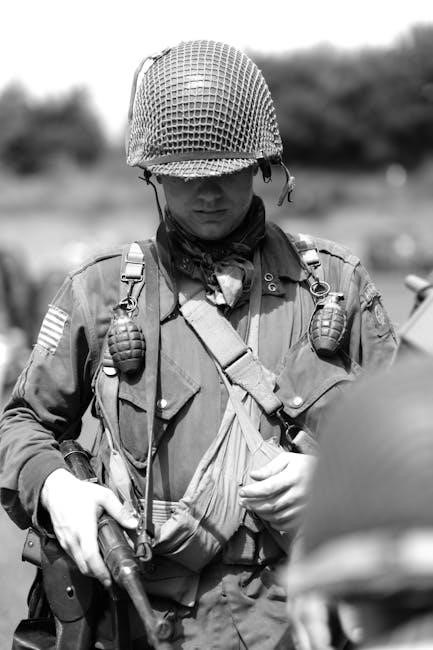
The core question Horner addresses is remarkably pertinent: why has Australia consistently engaged in warfare throughout its modern history? His research delves into the complex interplay between political objectives and military strategy, highlighting the responsibilities of policymakers in defining clear war aims.
Understanding these historical precedents offers valuable insights into the challenges of leadership during times of crisis, and the critical need for a well-defined purpose before initiating military action. The study underscores the enduring relevance of examining past conflicts to inform present and future decisions.
Effective Leadership in Wartime (MacArthur’s Korean War)
Stephen Taaffe’s analysis of General Douglas MacArthur’s leadership during the Korean War provides modern leaders with crucial lessons on the impact of effective command on battlefield outcomes. The book evaluates twenty-one commanders of the Eighth Army, emphasizing the significance of moral courage alongside strategic acumen.
This detailed study highlights how a leader’s character and principles directly influence their decision-making and the performance of their troops. It underscores the importance of not only tactical proficiency but also the ability to inspire and motivate soldiers in the face of adversity.
The research offers valuable insights into the complexities of wartime leadership, demonstrating how a commander’s actions can shape the course of a conflict and ultimately determine its success or failure. It’s a compelling read for anyone interested in the art of military leadership.