

Biofinity Multifocal Contact Lens Fitting Guide
Biofinity Multifocal lenses expertly address presbyopia, offering clear vision at all distances through a comprehensive parameter set and innovative optical designs.
Biofinity Multifocal contact lenses represent a significant advancement in presbyopic vision correction, designed to provide exceptional clarity and comfort for individuals experiencing age-related difficulty with near vision. These lenses utilize Comfilcon A material, known for its high oxygen permeability (Dk/t of 128) and 48% water content, promoting healthy eye oxygenation during daily wear.

Unlike traditional multifocal lenses, Biofinity Multifocal employs a unique optical design – available in both D and N Lens varieties – to seamlessly transition between distance, intermediate, and near vision. This innovative approach minimizes compromise and delivers a wider range of clear vision. The lenses are available in a broad power range, from -10.00D to +6.00D, with ADD powers of +1.00D, +1.50D, +2.00D, and +2.50D, catering to diverse visual needs. A consistent base curve of 8.6mm and diameter of 14.0mm further contribute to optimal fit and comfort.
Understanding Presbyopia and Multifocal Correction
Presbyopia is a natural, age-related loss of the eye’s ability to focus on near objects, typically becoming noticeable around age 40. This occurs as the lens inside the eye loses flexibility, making it difficult to accommodate for close-up tasks like reading. Multifocal contact lenses offer a solution by incorporating multiple power zones into a single lens, correcting both distance and near vision simultaneously.
These lenses feature concentric zones – one for distance vision and another for near vision – allowing the eye to seamlessly switch between focal points. Biofinity Multifocal lenses utilize this principle, but with a sophisticated design that minimizes visual disturbances and maximizes clarity at all distances. The appropriate ADD power is crucial for successful correction, determined by the patient’s near vision needs. Proper assessment and fitting are essential to ensure comfortable and effective vision correction for presbyopic individuals.
Patient Assessment & Initial Considerations
Thorough patient evaluation, including history, binocular vision, and detailed assessments of distance and near vision, is vital for successful Biofinity Multifocal fitting.
Comprehensive Patient History
A detailed patient history is the cornerstone of a successful Biofinity Multifocal lens fitting. Begin by documenting the patient’s current spectacle prescription and contact lens wearing history, if applicable. Specifically, inquire about any previous multifocal contact lens experiences – successes, failures, and reasons for discontinuation are crucial insights.
Explore the patient’s visual demands, considering occupational and lifestyle factors. What are their primary near and distance vision activities? How much time is spent reading, using digital devices, and driving? Understanding these needs will guide power selection.
Furthermore, assess the patient’s overall health, including any systemic conditions like diabetes or autoimmune diseases, and medications that may affect tear film or corneal health. Finally, inquire about any history of dry eye, allergies, or corneal abnormalities, as these can impact lens comfort and fit. A complete history ensures a tailored approach.
Binocular Vision Assessment with Room Lighting
Binocular vision assessment, performed with standard room lighting, is vital before initiating a Biofinity Multifocal fitting. Evaluate visual acuity at distance and near, both monocularly and binocularly, to establish a baseline. Assess refractive error and balance, noting any significant differences between eyes.
Carefully check pupillary responses, ocular motility, and alignment. Look for any signs of phoria or tropia, as these can influence multifocal lens performance; Evaluate accommodative function, including amplitude and facility, to understand the patient’s ability to focus at near.
Pay close attention to any reported symptoms of asthenopia (eye strain), headaches, or diplopia (double vision). These symptoms may indicate underlying binocular vision issues that need to be addressed before proceeding with the fitting. A stable binocular vision system is key for success.
Near Vision Assessment – Handheld Devices & Reading Material
Near vision assessment should mimic the patient’s typical reading habits. Have them read using their usual handheld devices – smartphones, tablets – or preferred reading material at a comfortable distance, typically around 40cm. Observe reading speed, posture, and any reported difficulties.
Inquire about the font size they typically use and if they experience any strain or blurriness. Assess near addition power requirements by having them read a standard near vision chart. Note any complaints of fluctuating vision or difficulty switching focus between distances.
This assessment helps determine the appropriate ADD power for the Biofinity Multifocal lenses. Understanding their everyday near tasks is crucial for optimal lens selection and patient satisfaction. Consider lighting conditions during assessment, as they impact reading performance.
Distance Vision Assessment – Normal Lighting Conditions
Distance vision assessment should be conducted in the patient’s typical visual environment, utilizing normal lighting conditions. Utilize a standard Snellen chart at 6 meters (20 feet) to evaluate visual acuity for each eye individually, and then binocularly. Record the best-corrected visual acuity achieved.
Assess for any refractive errors, including sphere, cylinder, and axis, crucial for Biofinity Multifocal Toric lens fitting. Evaluate contrast sensitivity and glare performance, as these can impact daily activities. Observe the patient’s blink rate and overall comfort during the assessment.
Confirm accurate refraction and ensure optimal distance correction before proceeding to near vision evaluation. This step establishes a baseline for comparison and helps determine the appropriate sphere power range for the lenses.
Biofinity Multifocal Lens Parameters
Biofinity Multifocal lenses offer a wide range of parameters, including sphere (-10.00D to +6.00D), ADD (+1.00D to +2.50D), and a standard 8.6mm BC/14.0mm diameter.
Available Parameters: Sphere, Cylinder, and Axis
Biofinity Multifocal Toric lenses necessitate precise parameter selection for optimal vision correction. The sphere power ranges from -10.00D to +6.00D, progressing in 0.50D increments after -6.00D, addressing nearsightedness and farsightedness effectively. For astigmatism correction, the cylinder parameter is crucial, working in conjunction with the axis to align the lens with the corneal curvature.
Accurate axis determination is paramount, especially during toric lens fitting, ensuring stable and clear vision. These three parameters – sphere, cylinder, and axis – are interconnected and must be carefully evaluated during the fitting process. Proper consideration of these values guarantees a comfortable and visually superior experience for patients with both presbyopia and astigmatism. Utilizing these parameters allows for a highly customized and effective vision solution.
Sphere Power Range: -10.00D to +6.00D (with 0.50D steps after -6.00D)
Biofinity Multifocal lenses offer a broad sphere power range, extending from -10.00D to +6.00D, catering to a diverse spectrum of refractive errors. This extensive range ensures suitability for a significant portion of presbyopic patients. Notably, the progression shifts to 0.50D steps beyond -6.00D, allowing for finer adjustments and more precise vision correction.
This granular control is particularly beneficial when refining the distance prescription, optimizing clarity and comfort. Careful consideration of the patient’s refractive error is essential when selecting the appropriate sphere power. The availability of these incremental steps facilitates a personalized fitting experience, maximizing the likelihood of successful multifocal lens adaptation and patient satisfaction. Accurate sphere power selection is foundational to achieving optimal visual acuity.
ADD Power Options: +1.00D, +1.50D, +2.00D, +2.50D
Biofinity Multifocal lenses provide four distinct ADD power options: +1.00D, +1.50D, +2.00D, and +2.50D. These options address varying degrees of presbyopia, enabling practitioners to tailor the near vision correction to each patient’s unique needs. The ADD power determines the additional magnification required for near tasks, such as reading or using digital devices.
Selecting the appropriate ADD power is crucial for comfortable and effective near vision. A lower ADD power (+1.00D or +1.50D) is often suitable for individuals with minimal presbyopia, while higher ADD powers (+2.00D or +2.50D) are typically prescribed for those requiring greater magnification. Careful assessment of the patient’s near vision demands and subjective responses during trial fitting is essential for optimal ADD power selection.

Base Curve & Diameter Specifications: 8.6mm BC / 14.0mm Diameter
Biofinity Multifocal contact lenses are designed with a consistent base curve (BC) of 8.6mm and a diameter of 14.0mm. These specifications are carefully chosen to ensure optimal fit, comfort, and performance for a broad range of patients. The base curve dictates how the lens interacts with the corneal surface, influencing oxygen permeability and tear exchange. A well-matched base curve is vital for minimizing corneal stress and maximizing lens comfort.

The 14.0mm diameter provides ample coverage of the cornea, promoting stable lens centration and reducing the risk of dryness or irritation. These standardized dimensions simplify the fitting process and contribute to a high degree of predictability. While these are the standard specifications, individual corneal topography may warrant consideration, but generally, these parameters provide excellent results for most patients.
Fitting Process & Optimization
Optimal vision with Biofinity Multifocal requires careful trial fitting, considering D or N lens designs, toric axis adjustments, and refining multifocal powers.
Trial Lens Fitting – Essential for Optimal Results
Trial lens fitting is paramount when prescribing Biofinity Multifocal lenses, ensuring a successful outcome for presbyopic patients. This crucial step allows for precise assessment of fit, clarity of vision at all distances – near, intermediate, and far – and overall patient comfort. Dispensing trial lenses directly after acceptable binocular vision assessment is recommended.
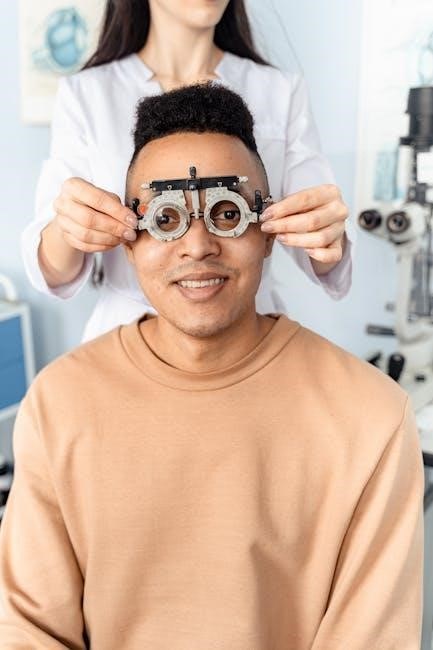
The process involves evaluating the patient’s subjective responses to different lens powers and designs. It’s vital to confirm that the chosen parameters effectively correct both distance and near vision without compromising intermediate vision. Careful refraction and consideration of the patient’s visual demands are key. If initial vision isn’t acceptable, proceed systematically through the lens optimization steps to refine the prescription and achieve optimal visual performance. Remember, a well-fitted lens enhances patient satisfaction and long-term wearability.
Optical Designs: D Lens vs. N Lens
Biofinity Multifocal lenses offer two distinct optical designs – D Lens and N Lens – to cater to diverse patient needs and visual profiles. The ‘D’ lens design generally suits patients who require more distance vision correction, while the ‘N’ lens is optimized for those needing greater near vision power.
Selecting the appropriate design is crucial for maximizing visual acuity and comfort. The choice often depends on the patient’s dominant visual task and the specific add power required. Practitioners should carefully consider the patient’s lifestyle and visual demands when determining which lens design will provide the best overall visual experience. Both designs aim to provide exceptional vision at all distances, but their differing characteristics allow for personalized correction.
Toric Orientation & Axis Adjustment (for Toric Lenses)

Biofinity Multifocal Toric lenses necessitate precise toric orientation and axis adjustment to achieve optimal visual correction for astigmatism alongside presbyopia. Incorrect alignment can significantly compromise visual acuity and induce discomfort. Careful assessment of lens rotation on the eye is paramount during the trial fitting phase.
Practitioners should instruct patients on how to recognize any blurring or distortion, which may indicate lens rotation. Adjustments to the axis are made in small increments to minimize astigmatic error and maximize clarity. Utilizing a slit lamp and observing the lens position relative to corneal markings aids in accurate alignment. Proper toric orientation ensures the cylinder correction effectively addresses astigmatism, contributing to sharp, stable vision at all distances.
Lens Optimization Steps – Refining Multifocal Powers
Optimizing Biofinity Multifocal powers requires a systematic approach, beginning with patient feedback regarding vision at various distances. If initial trial lenses don’t provide satisfactory results, adjustments are crucial. Consider refining the ADD power first, increasing it for improved near vision or decreasing it if experiencing excessive blur at intermediate distances.
Small adjustments – 0.50D increments – are recommended. If distance vision is compromised, slightly reduce the sphere power. Conversely, enhance sphere power for clearer distance sight. Remember to reassess binocular vision after each modification. Document all changes meticulously. A successful fit balances clear vision across all ranges, prioritizing patient comfort and visual needs. Repeat the assessment process until optimal clarity is achieved.
Lens Material & Characteristics
Biofinity Multifocal lenses utilize Comfilcon A material, boasting 48% water content and a high Dk/t of 128, ensuring comfort and oxygen permeability.
Comfilcon A Material
Comfilcon A is a silicone hydrogel material specifically developed by CooperVision for the Biofinity family of contact lenses, including the Biofinity Multifocal. This material is renowned for its exceptional balance of oxygen permeability, water content, and comfort. The unique composition of Comfilcon A allows for a naturally wettable lens surface, reducing the need for additional wetting agents and promoting all-day comfort, even for extended wear.
Unlike traditional hydrogel materials, Comfilcon A incorporates silicone, which significantly increases oxygen transmissibility. This is crucial for maintaining corneal health, as the cornea requires a constant supply of oxygen to function optimally. The material’s structure also contributes to its flexibility and resilience, allowing the lens to move naturally with the eye, minimizing irritation and maximizing wearing comfort. Comfilcon A’s properties make Biofinity Multifocal lenses an excellent choice for presbyopic patients seeking both clear vision and a comfortable wearing experience.
Water Content & Dk/t Values: 48% Water Content, 128 Dk
Biofinity Multifocal lenses achieve optimal comfort and corneal health through a carefully balanced combination of 48% water content and a high Dk/t value of 128. The water content contributes to the lens’s softness and wettability, ensuring a comfortable wearing experience throughout the day. This level of hydration helps minimize friction between the lens and the eyelid, reducing irritation and dryness.
However, high water content alone isn’t sufficient; oxygen permeability is equally vital. The Dk/t of 128 indicates the lens’s ability to transmit oxygen to the cornea. This high value ensures that the cornea receives ample oxygen, even during extended wear, promoting healthy corneal physiology and reducing the risk of hypoxia-related complications. This combination of water content and Dk/t makes Biofinity Multifocal lenses a breathable and comfortable option for presbyopic patients.
Wearing Schedule: Daily Wear
Biofinity Multifocal contact lenses are designed and approved for a daily wear schedule, offering convenience and promoting optimal eye health. This means the lenses are removed each night and fresh lenses are inserted the following morning. Daily wear minimizes protein and deposit buildup on the lens surface, reducing the risk of discomfort, infection, and corneal complications.

While extended wear options exist for some lenses, the daily disposable modality of Biofinity Multifocal prioritizes hygiene and corneal well-being. This schedule is particularly beneficial for individuals prone to allergies or dry eye, as it eliminates the need for nightly cleaning and storage. Consistent use of fresh lenses daily contributes to clearer vision and a more comfortable wearing experience, making Biofinity Multifocal a practical choice for presbyopic patients seeking reliable vision correction.